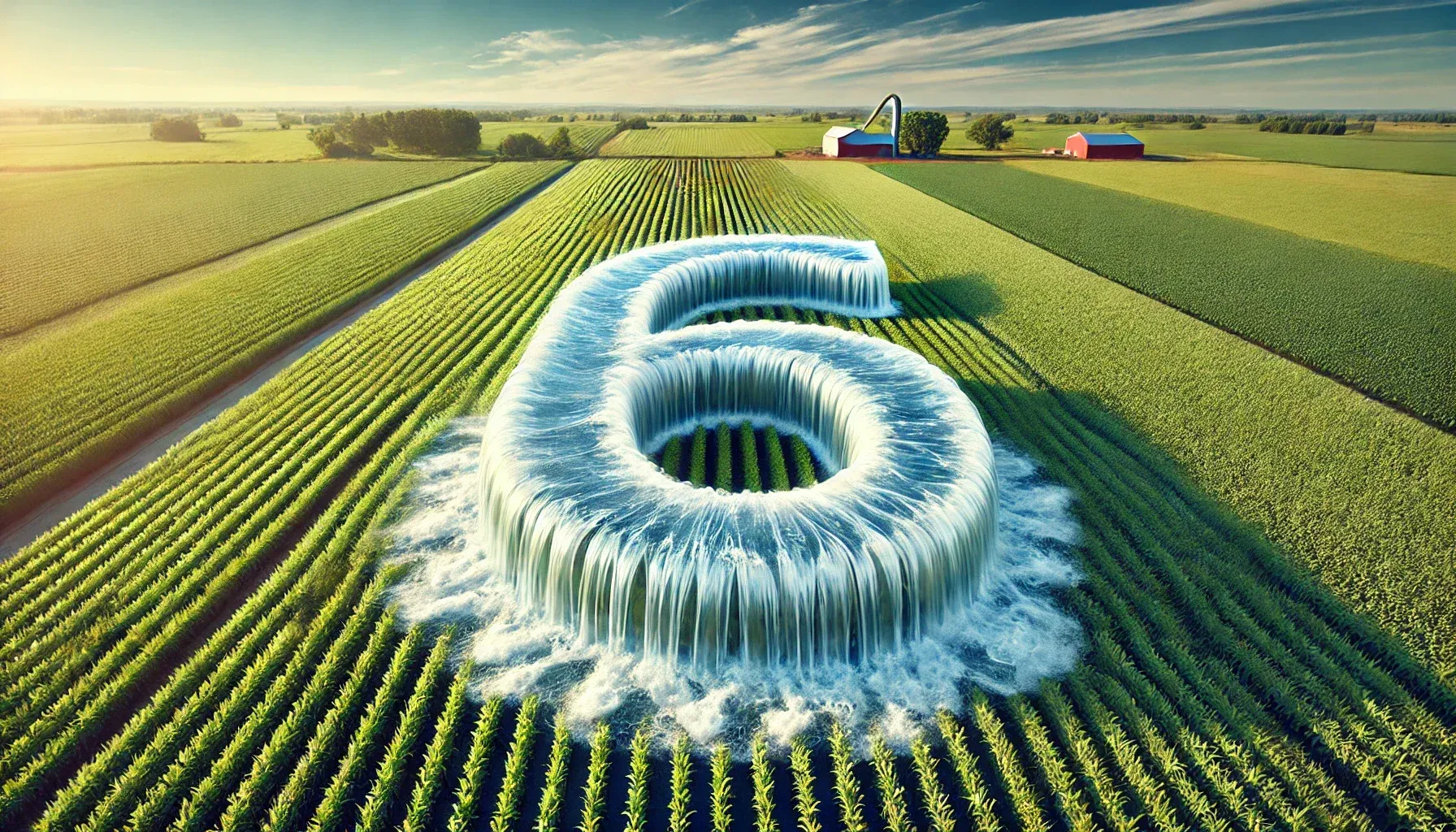
Efficient water management in agriculture is one of the fundamental pillars to ensure the sustainability of water resources and global food security. According to the Food and Agriculture Organization of the United Nations (FAO), agriculture is responsible for approximately 70% of freshwater consumption worldwide . However, a significant portion of this water, around 40% is wasted due to inadequate irrigation practices, resulting in economic losses and environmental degradation.
To face this challenge, we present six effective strategies to optimize water management in the agricultural sector, highlighting how Agroop can make its contribution.
1. Drop-by-Drop irrigation system
Drip irrigation, also known as drip irrigation, consists of applying water directly to the root zone of plants through emitters that release small amounts of water continuously. This method has an application efficiency that can reach up to 90%, compared to 50-60% for surface irrigation systems.
Practical Example: A tomato producer in Alentejo implemented a drip irrigation system in his greenhouses. With this change, he managed to reduce water consumption by 40% and increase productivity by 20%, due to the precise application of water and nutrients directly to the roots of the plants.
Agroop’s influence: Although Agroop does not provide irrigation systems, the integration of soil moisture sensors can complement this method, providing accurate data to adjust irrigation times and volumes, maximizing the system's efficiency.
2. Cover crops
Cover crops are planted between the main crops (between the rows) with the aim of protecting and improving soil quality. They increase organic matter, improve soil structure and increase water retention capacity.
Practical Example: A winegrower in the Douro region introduced legumes as cover crops between rows of vines. This practice resulted in a significant reduction in soil erosion and improved water retention, allowing for less frequent irrigation during the drier months.
Agroop’s influence: The decision on which cover crops to use and their management are specific to each farm. However, monitoring soil moisture through Agroop sensors can provide insights into how these crops influence water availability in the soil.
3. Rainwater harvesting
Collecting and storing rainwater for use in irrigation is a sustainable practice that reduces dependence on groundwater and surface water sources. This method is particularly useful in regions with seasonal rainfall.
Practical Example: An agricultural farm in the Algarve installed rainwater collection systems on the roofs of warehouses, storing it in cisterns. During the dry season, this water is used to irrigate horticultural crops, resulting in a 30% reduction in groundwater use.
Agroop’s influence: Although Agroop does not install rainwater collection systems, its sensors can help to effectively manage the use of stored water, indicating the ideal times for irrigation based on soil humidity.
4. Conservation mobilization
Conservation mobilization involves techniques that minimize soil disturbance, such as direct seeding and keeping crop residues on the surface. These practices improve soil structure, increase water infiltration and reduce erosion.
Practical Example: A cereal farmer in Ribatejo adopted minimum mobilization, leaving residues from previous harvests in the field. He observed an improvement in soil water retention and a reduction in the need for supplemental irrigation.
Agroop’s influence: The implementation of these techniques depends on the agricultural practices adopted by the producer. However, Agroop can provide data on soil moisture that helps assess the effectiveness of these practices in conserving water.
5. Weather-based irrigation planning
Adjusting watering times and volumes based on anticipated weather conditions can prevent unnecessary water application. Using weather forecasts and evapotranspiration data helps align irrigation with the actual needs of crops.
Practical Example: A corn producer in Golegã uses weather forecasts to schedule irrigation. By avoiding irrigation before predicted rains, he was able to save water and reduce operational costs.
Agroop’s influence: Although Agroop does not provide weather forecasting services, its soil moisture sensors allow it to monitor plants' water needs in real time, complementing climate information for more accurate irrigation management.
6. Soil moisture monitoring with innovative technology
The use of soil moisture sensors allows you to monitor the water content in the soil in real time, providing accurate data for more informed irrigation decisions. These sensors help prevent over- or under-watering, contributing to water conservation and plant health.
Practical Example: A citrus farm in the Algarve implemented soil moisture sensors connected to the Agroop platform. Before that, watering was done empirically, based on experience and daily temperatures. After installing the sensors, they realized that in many areas they were overwatering. They adjusted irrigation shifts and, in less than one campaign, reduced water consumption by 35%, without compromising the trees' yield — on the contrary, improved fruit quality and reduced the incidence of fungal diseases associated with excess water in the soil.
Agroop’s influence: It's total. Agroop provides high-precision humidity probes and a platform that interprets data in a simple and practical way. The farmer knows, in real time, the water status of the soil, can predict water needs based on history and adapt irrigation with precision. This technology eliminates uncertainty and turns water management into an informed — and profitable — decision.
Conclusion: Water is money — and knowledge is power
Efficient water management is one of the biggest challenges of modern agriculture. Complexity increases with unstable weather, longer dry periods and restrictions imposed on groundwater abstraction. Good agronomic practices, such as choosing efficient irrigation systems, using cover crops or collecting rainwater, are fundamental. But they have limits. And, often, the farmer has to make decisions based on sensations, “feeling” or superficial observation of the plant and soil.
That's where technology can — and should — make a difference. Agroop does not replace the farmer's know-how. But it gives you the tools so that this knowledge is supported by concrete data. With Agroop's humidity probes, the farmer knows exactly when and how much to water. Less water, less energy, less wasted time. More productivity, more sustainability, more control.
DISCOVER THE SOIL MOISTURE PROBES WHICH JUST DON'T TAKE IMPERIALS YET.
Want to know how much water you're wasting — and how much you could be saving?
💧 Visit our website and discover how Agroop probes are transforming the way Portuguese farmers water their fields.👉 Click here to find out more — because watering blindly is getting (very) expensive.
