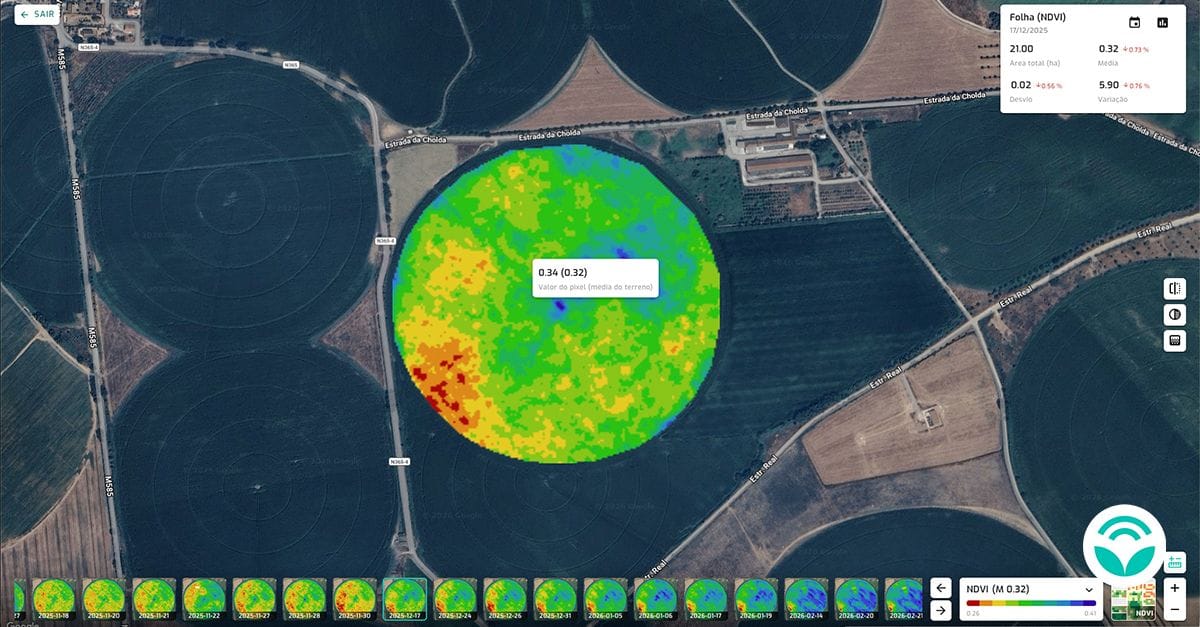
For a long time, technology was treated as an optional investment in agriculture: interesting for those who wanted to innovate, but unnecessary for those who managed to maintain the usual model. That distinction is disappearing. With higher costs, greater climate variability and increasing pressure on resources, producing well depends increasingly on making informed decisions.
The cost of continuing to guess
Applying water, nutrients or treatments without sufficient knowledge of plot variability can mean waste and inconsistent results. A decision based solely on an average may be reasonable for one area and inappropriate for another. Precision agriculture helps make these differences visible and tractable.
This does not mean replacing the farmer's knowledge. It means giving you better signals to match experience. Meteorological data, sensors, maps and operations history can support faster decision making and more objective verification of the outcome.
Technology that solves concrete problems
Adoption should not start with the most advanced equipment, but with the most important need. If the problem is irrigation management, it is necessary to monitor available water, crop demand and soil response. If it is production instability, it is necessary to link operations, conditions and results. The right tool is the one that integrates into this process without making it impractical.
In corn cultivation, for example, small differences in the timing and amount of water can have a significant impact. Better monitoring allows you to protect production potential and use resources more judiciously. The same principle applies to many other cultures and systems.
Surviving is also learning faster
Technological innovation creates an advantage when it reduces the time between observing a problem, acting and learning from the result. This ability to learn makes exploration less dependent on perfect conditions and more prepared to adjust the plan when reality changes.
Agricultural technology is not a luxury because the scope for wasting water, energy, time and production is decreasing. It is one of the ways to transform uncertainty into responsiveness.
