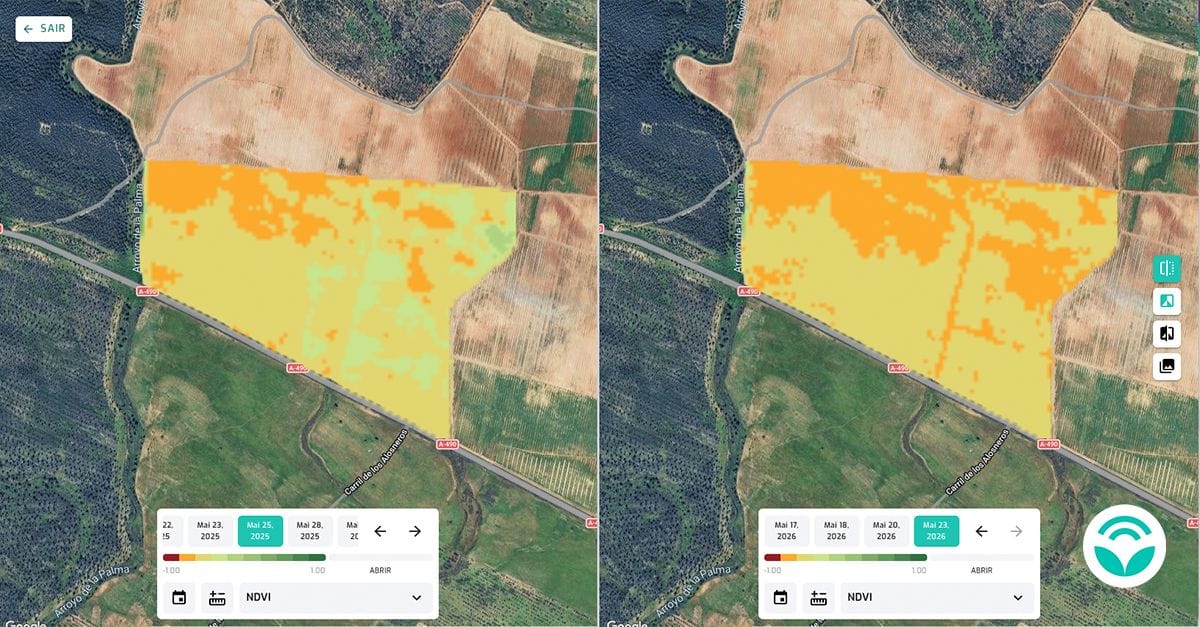
Agricultural sustainability is often presented through goals, commitments and presentations. All of this is important, but it is not enough. In the field, sustainability is tested in repeated decisions: when to water, how much to apply, how to protect the soil, which operation to prioritize and how to react when conditions change.
Testing takes place in daily operation
A practice is only sustainable if it can be applied consistently, within the limitations of time, labor, equipment and exploration budget. A recommendation that depends on inaccessible information or a process that is too cumbersome is unlikely to be maintained after the first campaign.
Therefore, the starting point must be operational. What losses do you want to reduce? Which resource is under the most pressure? Which decision is made with the most uncertainty? By answering these questions, it becomes possible to choose indicators and practices that make sense for that exploration, instead of adopting a generic list of actions.
Measure to learn, not just to report
Consumption of water, energy, fertilizers, productivity, quality and incidence of problems are parts of the same analysis. Measuring allows you to compare campaigns, understand the effect of a change and quickly correct what doesn't work. It also helps to make visible work that previously depended solely on experience and memory.
Operational sustainability is a cycle: observe, decide, execute, check and adjust. Technology can support each step, as long as the data is organized and presented in an understandable way for those working in the field.
The best strategy is not the one that only works in a normal year. It is what keeps the farm capable of responding to heat, drought, excess rain, equipment failures or market variations. Reducing dependencies and improving anticipation makes production more robust.
Sustainability that only appears on slides is a promise. Sustainability that changes operations, is measured and improves with learning is agricultural management prepared for the future.
