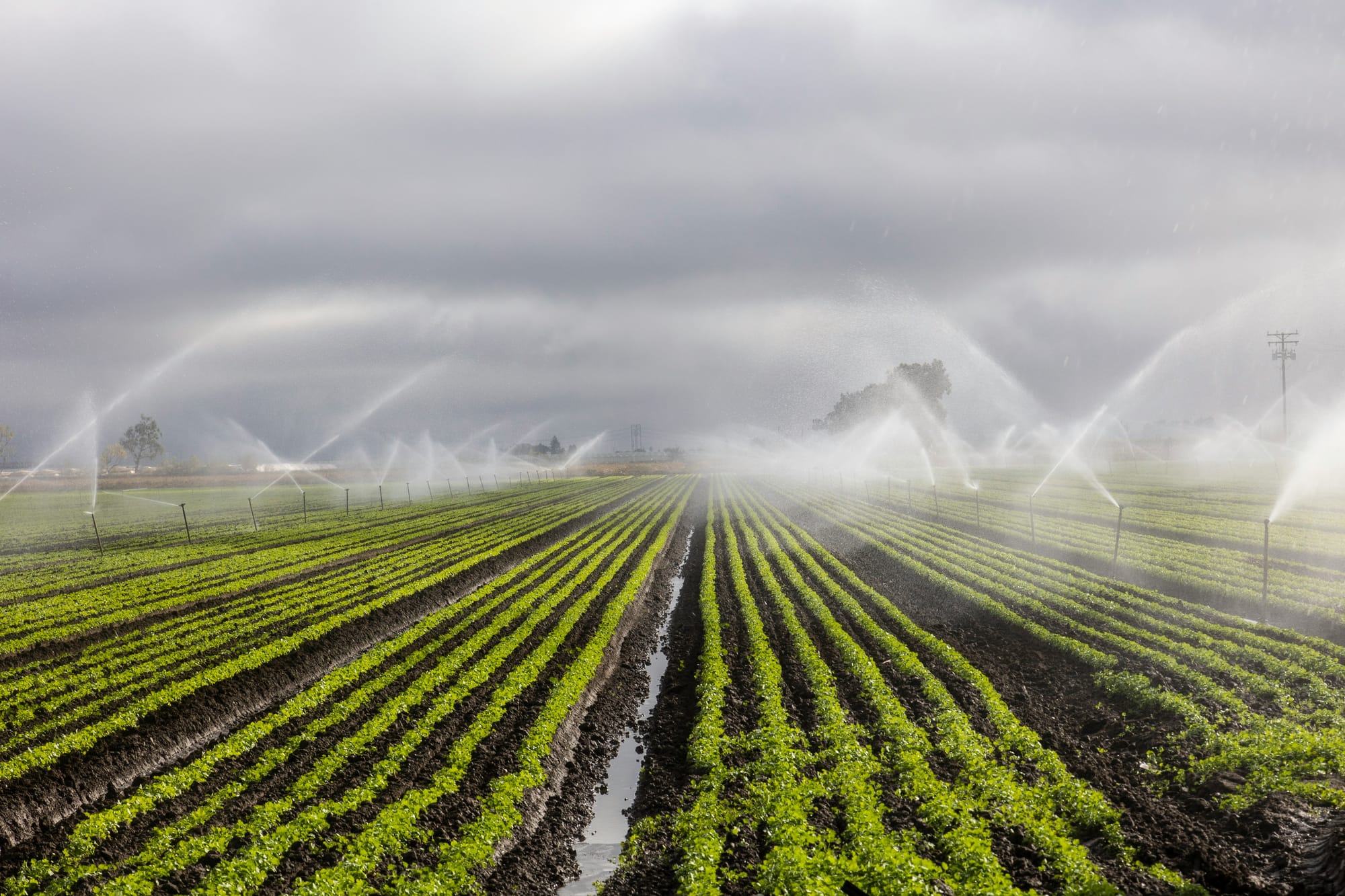
Water is the resource that makes much of agricultural production possible, but it is also one of the resources most exposed to variability, conflict and limitation. The combination of growing demand, more frequent droughts and unequal distribution makes water management a question of competitiveness and not just conservation.
Every drop has a decision behind it
Irrigation efficiency is not limited to installing more modern equipment. It depends on knowing when the crop needs water, how much water the soil can make available, how the climate will evolve and what the response observed in the plot is. The same amount applied may represent adequate use at one time and a loss at another.
Without measurement, management becomes dependent on general estimates. With field, meteorological and historical data, it is possible to bring the decision closer to real conditions and reduce unnecessary applications without compromising the development of the crop.
Efficiency is productivity per unit of water
The relevant question is not just how much is produced per hectare. This is how much value can be generated per unit of water, energy and other resources. This perspective helps to compare strategies, identify losses and guide investment towards areas with the greatest impact.
It also requires collaboration. Farmers, associations, management entities, technicians and technology companies need to work with compatible information and clear objectives. Water is not only managed within the plot; is managed throughout the entire system.
The advantage will be for those who prepare before the shortage
Waiting for a restriction to start measuring is starting late. Contingency plans, maintenance, knowledge of the soil, monitoring and transparent rules allow you to react with less improvisation. Efficiency is built before pressure reaches maximum.
Water is the new gold of agriculture because it determines what can be produced, with what risk and for how long. Managing better isn't just about spending less: it's about preserving the ability to produce.
